The court is considering the case based on a constitutional complaint filed by Anatolii Puhachov
March 4, 2026
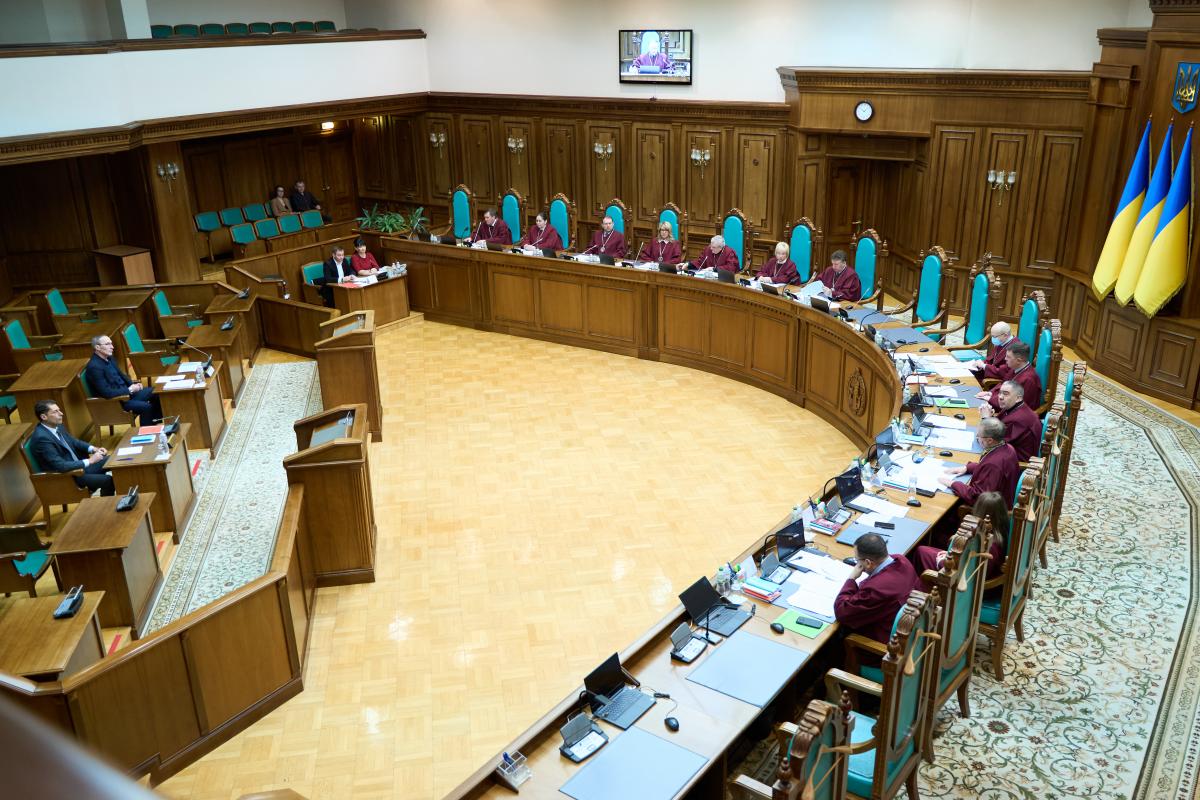
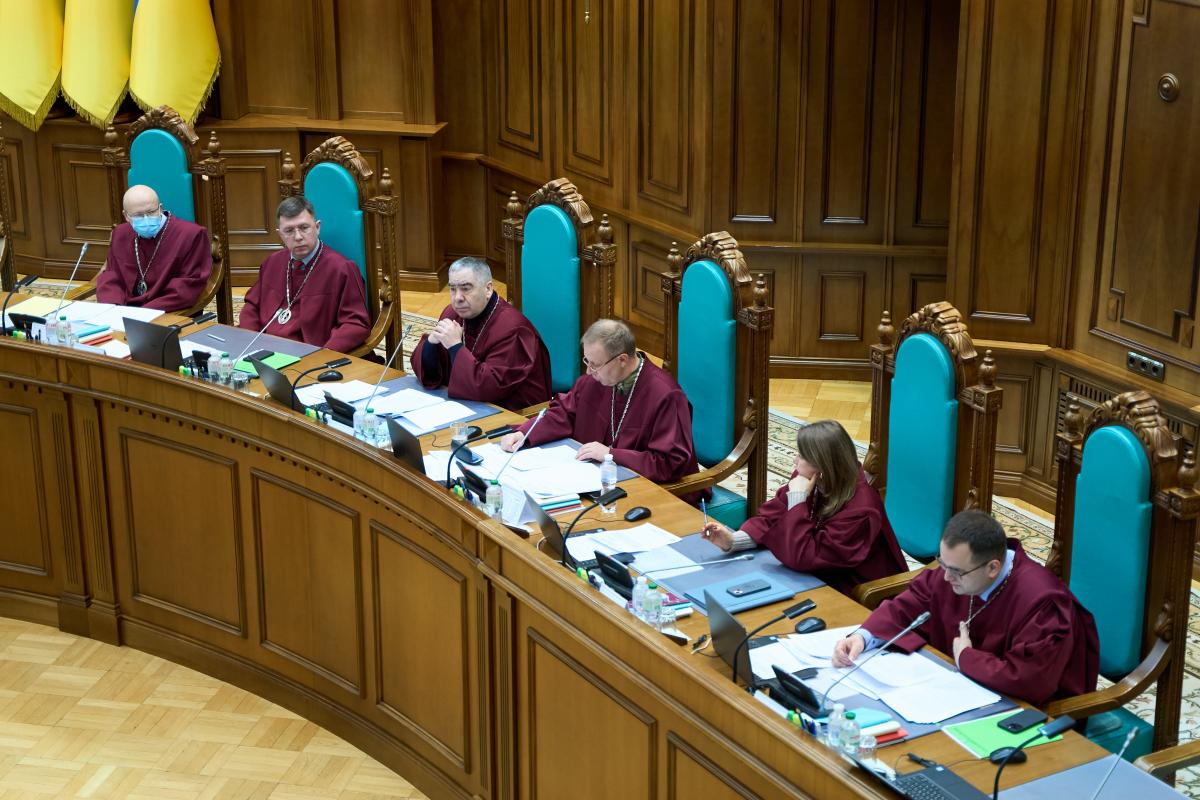
On March 3, 2026, during the public part of the plenary session, the Grand Chamber deliberated the case upon a constitutional complaint filed by Anatolii Puhachov in the form of written proceedings.
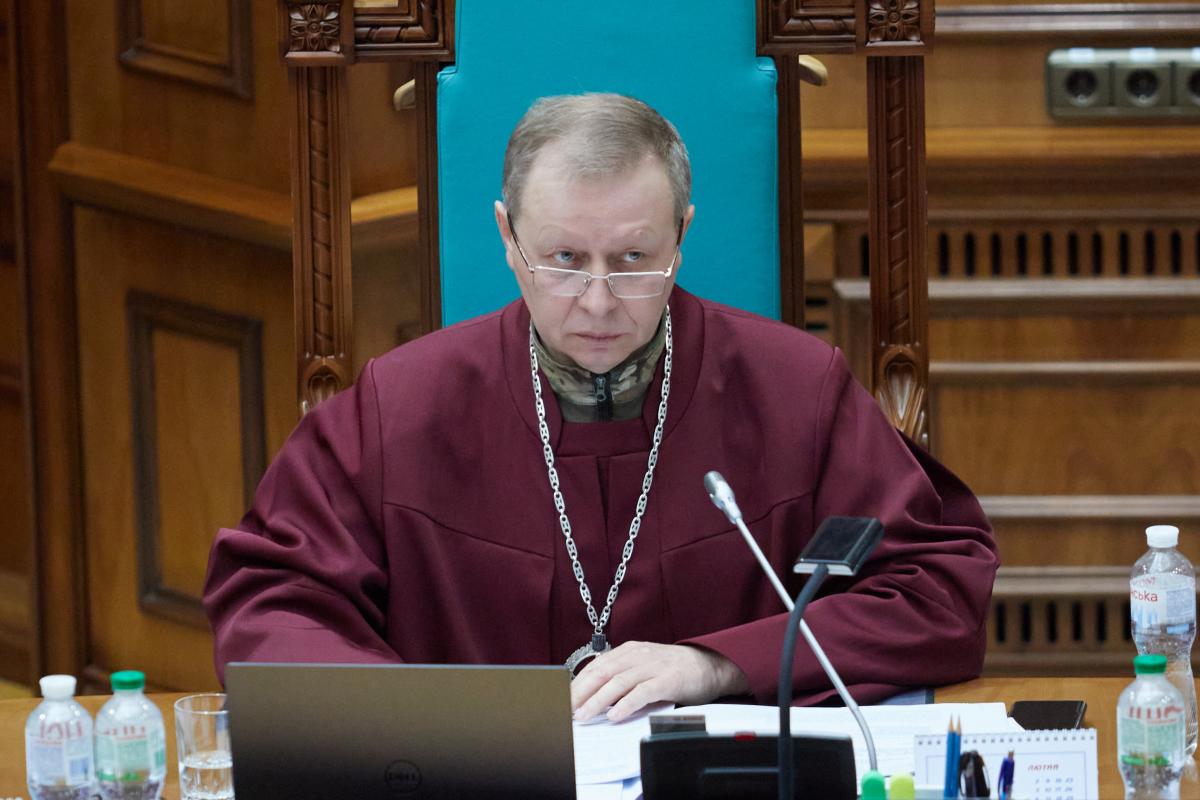
During the plenary session, the Judge-Rapporteur in the case, Viktor Kychun, announced that the applicant had appealed to the Constitutional Court of Ukraine to review the constitutionality of a specific provision contained in the title of Article 365.1 of the Criminal Code of Ukraine (hereinafter, “the Code”), namely, “law enforcement officer,” as well as Article 13.6 of the Law of Ukraine “On the Judiciary and the Status of Judges” No. 1402-VIII, dated June 2, 2016, as amended (hereinafter, “the Law”).
Article 365 of the Code provides for criminal liability for abuse of power or official authority by a law enforcement officer. Article 13.6 of the Law establishes that “conclusions on the application of legal norms set forth in the resolutions of the Supreme Court shall be taken into account by other courts when applying such legal norms.”
The Judge-Rapporteur presented the case materials in detail, noting, in particular, that Anatolii Puhachov, a major in the civil protection service, worked as the chief inspector of the Pechenizkyi District Sector of the Main Directorate of the State Emergency Service of Ukraine in the Kharkiv Region.
In March 2017, following a statement by the victim, information about a criminal offense involving bodily harm to this citizen, committed by Anatolii Puhachov, was entered into the Unified Register of Pre-trial Investigations.
According to the indictment of the pre-trial investigation body, the actions of Anatolii Puhachov were classified as criminal proceedings under Article 365.2 of the Code.
The Pechenizkyi District Court of Kharkiv Region, in its judgment of August 22, 2019, found Anatolii Puhachov guilty of committing the specified criminal offense (punishment – 5 years of imprisonment with deprivation of the right to hold positions in law enforcement agencies for a period of 3 years).
The Kharkiv Court of Appeal, in its ruling of January 21, 2020, overturned the verdict of the Pechenizkyi District Court of Kharkiv Region and ordered a new trial in the court of first instance.
Following a retrial, the Pechenizkyi District Court of Kharkiv Region concluded that the defendant, Anatolii Puhachov, was not a law enforcement officer. In its judgment of January 28, 2022, which was upheld by the Kharkiv Court of Appeal on December 8, 2022, the court found him guilty of committing a criminal offense under Article 125.1 of the Code (punishment – 100 hours of community service).
By its decision of August 30, 2023, the Grand Chamber of the Supreme Court overturned the ruling of the Kharkiv Court of Appeal of December 8, 2022, and ordered a new trial in the court of appeal.
By its judgment of September 10, 2024, the Kharkiv Court of Appeal overturned the judgment of the Pechenizkyi District Court of Kharkiv Region of January 28, 2022, and found Anatolii Puhachov guilty of committing a criminal offense under Article 365.2 of the Code.
The Supreme Court, composed of a panel of judges of the Third Chamber of the Cassation Criminal Court, agreed with the decision of the court of appeal and, by its ruling of March 20, 2025, left it unchanged.
The author of the complaint believes that the contested provision of Article 13.6 of the Law violates the principle of independence of judges in the administration of justice. In his opinion, the specific provision contained in the title and Article 365.1 of the Code (“law enforcement officer”) “does not meet the requirements of clarity, accuracy, and unambiguity” and therefore contradicts the principle of legal certainty as a component of the principle of the rule of law.
The complainant asserts that the Grand Chamber of the Supreme Court, contrary to its powers, unreasonably determined that the State Emergency Service is a law enforcement agency and thereby “formulated a new rule of law.” The application of the relevant conclusions by the courts led to a violation of his right to a fair trial “due to a violation of the principle of legal certainty.”
The Judge-Rapporteur informed that in order to ensure a full and objective deliberation of the case and the delivery of justified decision by the Court, he had consulted with scholars from the Volodymyr Koretsky Institute of State and Law of the National Academy of Sciences of Ukraine, the Yaroslav Mudryi National Law University, the Taras Shevchenko National University of Kyiv, and the Ivan Franko National University of Lviv, with a request to express their positions on the issues raised in the constitutional complaint. The judges will be informed of the content of the positions expressed in the in-camera part of the plenary session.
After examining the case materials in the public part of the plenary session, the Court proceeded to the in-camera deliberations for a decision.
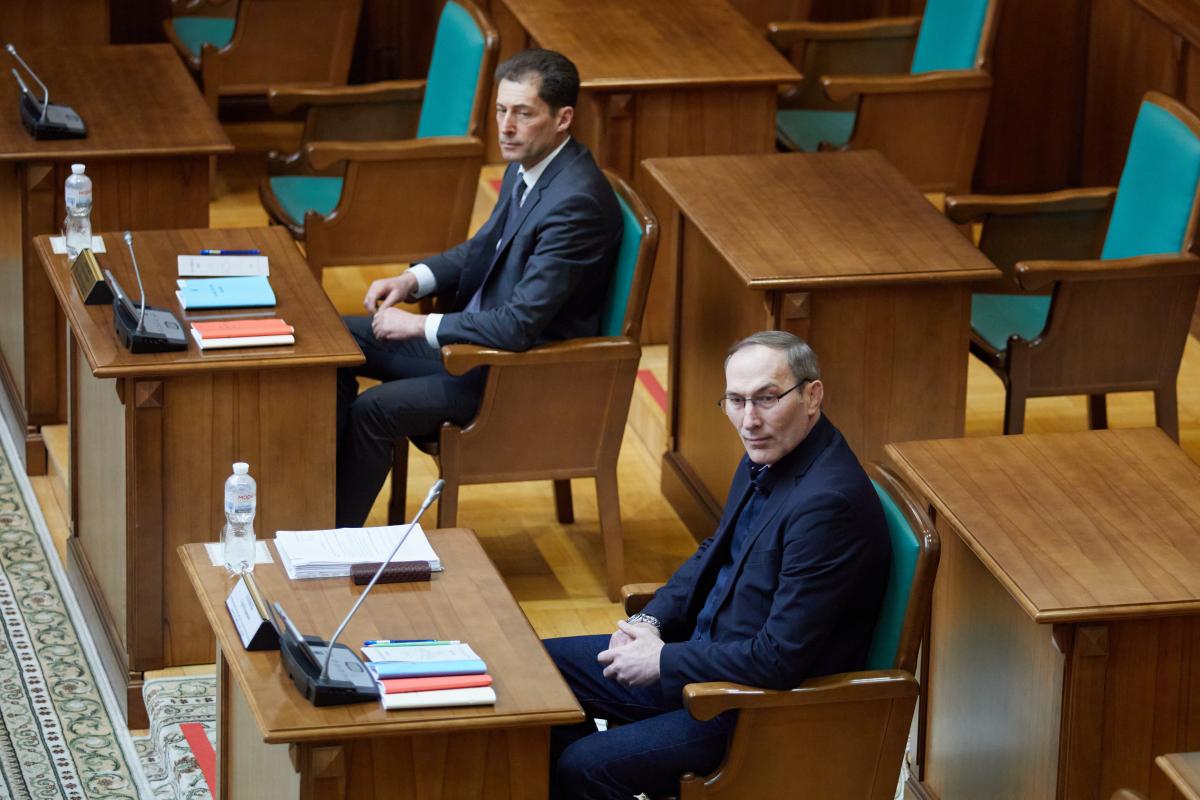
The plenary session was attended by the representative of the subject of the constitutional complaint, lawyer Serhiy Kanivets, and the representative of the President of Ukraine in the Constitutional Court of Ukraine, Serhiy Dembovskyi.
The video recording of the plenary session is available on the Court’s official website in the Section “Archive of Video Broadcasts of Sessions”.