03.03.2026
On February 26, 2026, the Constitutional Court of Ukraine hosted a professional event dedicated to the specifics of the division of powers between constitutional and administrative justice.
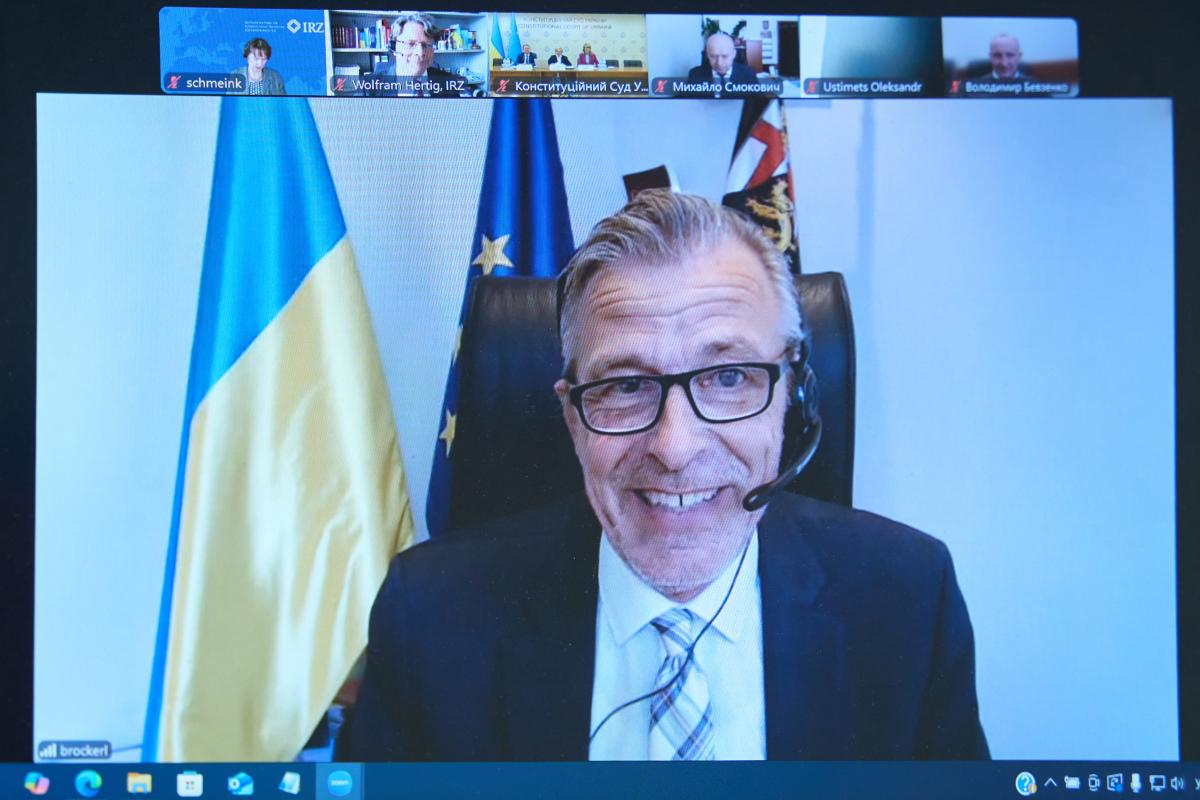
The main speaker at the educational online lecture was Professor Lars Broker, President of the Constitutional Court and the Higher Administrative Court of the Federal Land of Rhineland-Palatinate.
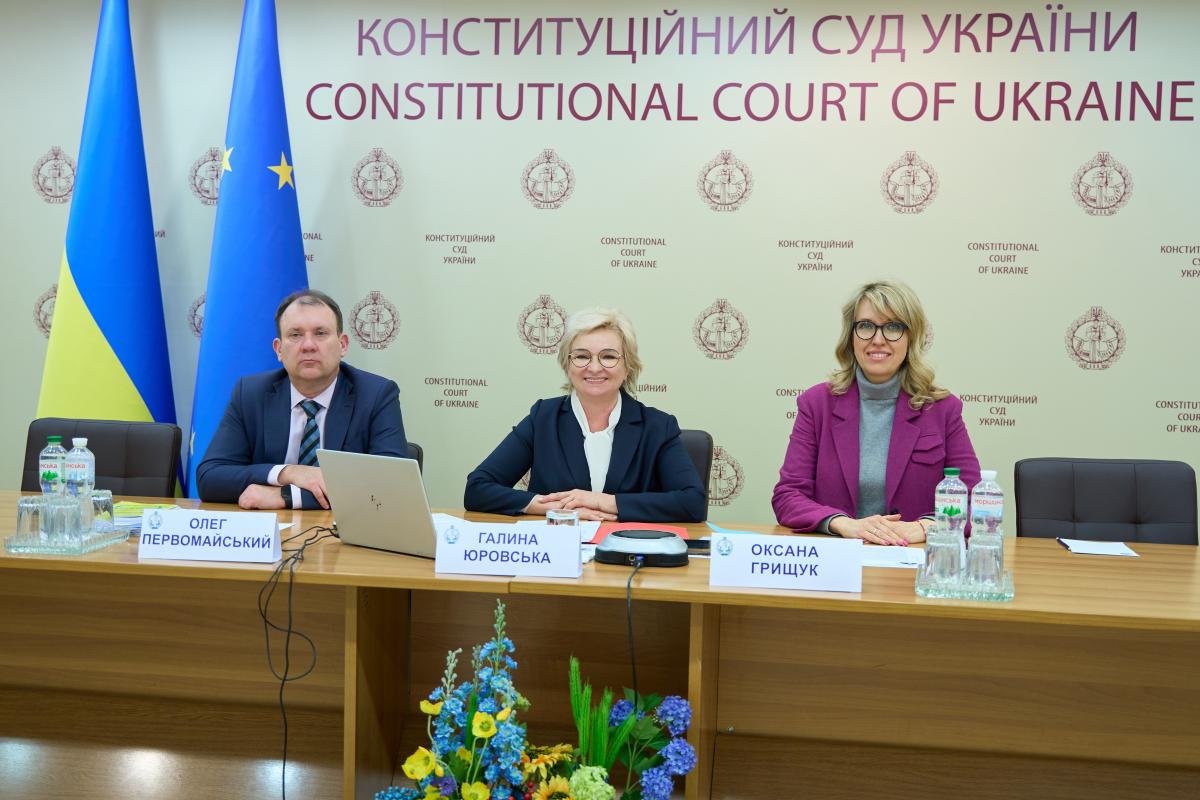
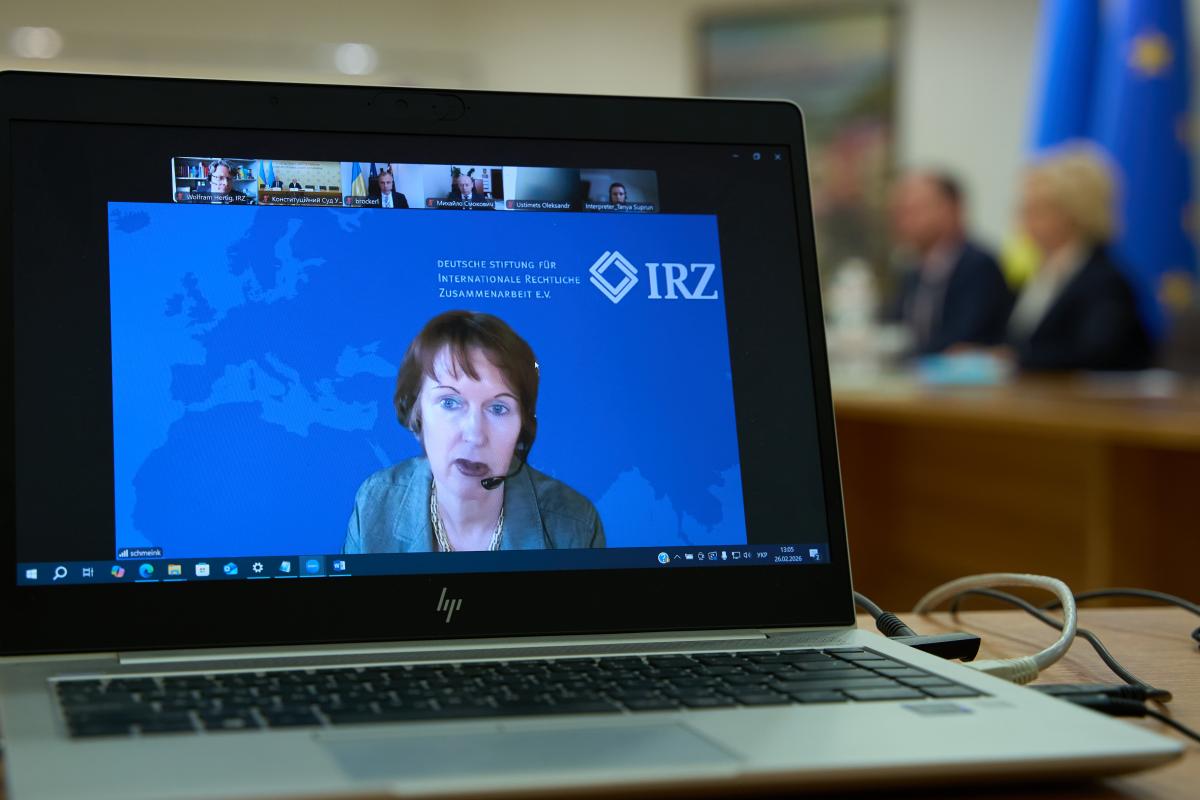
The event was attended by judges of the Constitutional Court of Ukraine Oksana Hryshchuk, Oleg Pervomayskyi, Galyna Yurovska, Angela Schmeink, project manager in Ukraine and Vietnam at the German Foundation for International Legal Cooperation (IRZ), Wolfram Gertig, senior project manager at IRZ, and Gennadiy Ryzhkov, legal advisor at IRZ.
The event attracted a wide audience, including judges from the judicial system, prosecutors, representatives of the National School of Judges of Ukraine, lawyers, academics, teachers, postgraduate students, students from higher education institutions, and the youngest lawyers – students of the Junior Academy of Sciences.
Professor Lars Broker presented the concept of an “alliance” between the two jurisdictions. The question of where administrative law ends and constitutional law begins formed the basis of his presentation. The speaker emphasized that constitutional and administrative proceedings are “public law proceedings” that are closely interrelated, as they have a common mission – to interpret the constitution and apply it directly, in particular to ensure the protection of fundamental rights of citizens. The main criteria for distinguishing between competences are legislative regulation and the definition of the subject matter of the dispute.
The speaker noted that appeals to administrative courts are possible in all disputes of a public law nature, with the exception of constitutional law. He analysed the cases in which a public law dispute takes on a constitutional law character and vice versa.
To define this boundary, the speaker outlined the evolution of legal doctrine in Germany, such as: the outdated formal theory (only disputes directly specified in the list of competences of constitutional jurisdiction are constitutional); the theory of “double constitutional immediacy” (a constitutional dispute exists if two constitutional bodies dispute their rights and obligations arising directly from the Basic Law); the theory of “material subjectivity” (the new practice of the Federal Administrative Court emphasizes the status of the parties).
To support these theories, the professor cited three landmark cases from the practice of the Federal Constitutional Court (BVerfG) and the Federal Administrative Court (BVerwG). In particular, he highlighted the conditions under which cases fall within the jurisdiction of administrative courts and those under which they fall within the jurisdiction of constitutional courts, and answered questions from the audience.
The judges of the Constitutional Court of Ukraine expressed their gratitude to their German colleagues for their long-standing fruitful partnership and openness to cooperation. It was emphasised that studying European experience, in particular German legal doctrine, allows for a significant enrichment of national practice with modern approaches to justice.
For more details, follow the link: https://youtu.be/1fB7vjNj2uA